
Patience, Not Just Product: What It Really Takes to Break Into Airport and Travel Retail Vending

The proposition looks simple: high foot traffic, captive audiences, premium margins. What's less obvious is how the business moves. It doesn't move fast.
Airport and travel concessions is a small industry, and it runs on relationships as much as it runs on RFPs.
A Growing Piece of a Bigger Priority
Concessions aren't an airport's top priority. Airport management exists first to safely keep planes flying and people moving through terminals. Operations and safety come before anything else.
But non-airline revenue is an increasingly important part of the picture. Retail, food and beverage, parking, and other services now contribute a meaningful and growing share of many airports' P&L, supplementing revenue that has traditionally come from landing fees and gate leases. That shift means concessions get real strategic attention from airport leadership, even though they'll never outrank safety and operations. You're competing for a growing but still secondary priority, and that shapes the opportunity and its pace.
A Small World With Familiar Faces
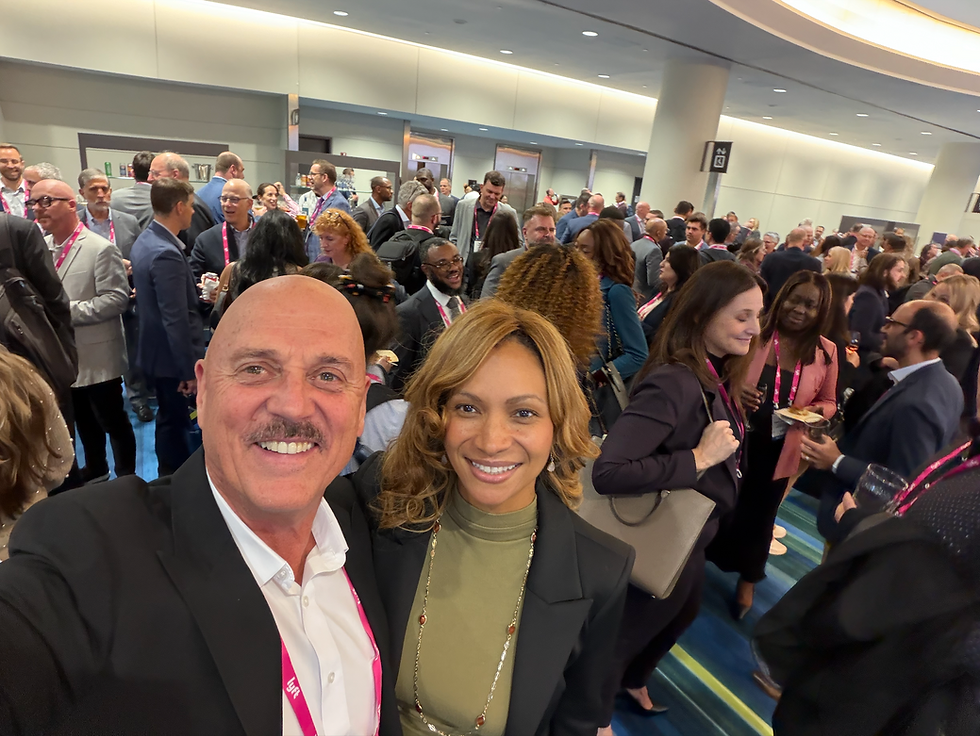
Walk into any industry mixer or conference reception tied to this sector and the same names and faces keep coming up, sometimes in different roles. Major master concessionaires, companies like Avolta, HMSHost, Paradies Lagardère, SSP, and WHSmith, regularly host networking events around industry conferences. These gatherings aren't just socializing. They're where deals get their start, long before an RFP hits the street.
It's worth understanding how the model actually works. Airports typically structure vending, services, retail, and food and beverage as separate concession categories, each awarded through its own contract. Master concessionaires often win the larger retail and F&B programs and bring in partners to enhance or fulfill part of a bid package, but they don't automatically win every category at every airport. Vending, automated retail and certain services contracts are frequently awarded directly by the airport authority instead. Either way, a relatively small group of companies holds significant influence over who gets a shot at a location, whether as prime contract holder or gatekeeper.
For newer entrants, that can feel like a closed door. In practice, it's more like a long hallway. The people who show up consistently, at conferences and the receptions around them, are the ones positioned when an opportunity opens up. This industry does business with those it knows and trusts.
Airport Conferences Cluster Heavily in September
The ACI World Airport Experience Summit runs August 31-September 4 in Istanbul, Türkiye — an international counterpart to the North American circuit that follows it: FTE Global September 8-10 in Grapevine, Texas, known for panel sessions bringing together technology providers, airlines, and airports on digital transformation and passenger experience. Then comes ACI-NA's flagship Annual Conference & Exhibition September 14-17 in Philadelphia.

That cluster sits inside a full-year calendar worth tracking. ACI-NA's Annual Conference is the marquee event for the broader industry, drawing directors and infrastructure leaders. AAAE's Annual Conference, held in Los Angeles in May 2026, was the other relevant industry-wide gathering. AXC, each February, is the concessions industry's own dedicated event, connecting suppliers with the decision-makers who control concession opportunities. AMAC and PTE World round out the calendar, the former for diverse-business development, the latter for international airport design and construction. Attending consistently, not just once, is what builds recognition.
Consistent attendance compounds — here's what one year of it looked like in practice. Who shows up shapes which conversations happen where. ACI's 2025 Assembly in Toronto drew more than 2,500 airport executives and industry partners. The program included sessions on cybersecurity and AI adoption, a keynote from astronaut Chris Hadfield challenging airport leaders to consider facilitating future space flights, and evening receptions hosted by SSP America and Paradies Lagardère. ACI and AAAE draw airport directors and C-suite executives focused on strategy. AXC skews toward concessions managers, retail and F&B operators, and their suppliers, making it the more direct venue for conversations about landing and running a concession.
Why Everything Takes Longer Than You Think
Timelines here are long for structural reasons, not just bureaucratic ones. Airports and transit hubs are public entities, and procurement generally runs through a formal RFP process built for fairness, not speed. Health, fire, and planning code compliance add further layers of review, since safety requirements in a secure, high-traffic terminal are far stricter than a typical retail build-out. It's normal for a promising opportunity to take roughly a year just to reach bid, then another 18 months or more before a concession is signed, built out, and live. Add in the master concessionaire's own vetting of subcontractors, and the runway from opportunity to operating can stretch well past two years.
Not every path is that slow. Pilots and partnerships that deploy under an existing concessionaire's contract can move in months rather than years, since they skip the RFP cycle entirely. But that's the exception. The long game is the norm: companies that pitch hard and vanish when nothing materializes in 90 days rarely make it into the rotation, while those that stay present and treat the runway as normal are the ones still in the room when an RFP gets awarded.
There Is No Single Path to National Scale
There is no national program or master key that unlocks airport vending opportunities across the country. Every airport is its own world, setting its own priorities and negotiating its own master concession agreement, sometimes with different concessionaires from one property to the next.
Aligning with a single master concession partner can open real doors, but it's rarely a shortcut to national scale. No single master concessionaire holds the rights at every airport, and even where one operates at multiple properties, its local teams run with real autonomy. A given concessionaire is also, understandably, focused on running its own business, not building out yours.
That's why it's worth looking beyond any one relationship toward partners genuinely active across the space: operators, brokers, and advisors who maintain relationships with multiple master concessionaires rather than being locked into just one. Because no single concessionaire covers every opportunity at every airport, a partner who moves across relationships is often better positioned than one tied to a single footprint.
What This Means for New Entrants
Show up before you need to. Conference networking isn't optional; it's where relationships form, often a year or more before an opportunity exists.
Work with someone who's already in the business. Experience and an existing network are hard to substitute for; a partner with years in the space and credibility with decision-makers shortens the runway.
Get to know the master concessionaires, not just individual airports. Understanding how companies like Avolta, HMSHost, Paradies Lagardère, SSP, and WHSmith structure subcontractor relationships matters as much as knowing any single property.
Look for partners active across multiple relationships. No one company holds the rights to every airport, so partners working across several are better positioned to keep finding opportunities.
Plan your pipeline in years, not quarters. With roughly a year to RFP issuance and another 18-plus months to a live concession, shorter-horizon growth projections will disappoint.
Track opportunities before they're actionable. A location not up for bid today may open next year; staying visible pays off.
The airport and travel retail vending channel rewards patience over speed. It's a small industry where reputations travel fast and memories are long. For operators willing to play the long game, the opportunities are real. They just don't arrive on anyone's quarterly timeline.
Comments